
Fibroid radiofrequency ablation in Seville
Transvaginal ultrasound-guided radiofrequency ablation (RFA) of uterine fibroids: a minimally invasive technique to treat symptomatic fibroids without opening the abdomen. We perform it under ultrasound guidance and always after an individual assessment: it is not the best option for every woman.
What does it involve?
Fibroids (myomas) are benign tumours of the muscle of the uterus and are very common in women of childbearing age. Many cause no symptoms and only need follow-up. When they do cause symptoms (heavy periods, pelvic pain, pressure on the bladder or bowel), there are several options and it is worth choosing the one that suits you best.
In radiofrequency ablation, the fibroid is located with the ultrasound probe and a thin needle is guided into it. High-frequency current produces controlled heat (above 65 °C) that destroys the fibroid tissue. The body gradually reabsorbs it and the fibroid shrinks over time.
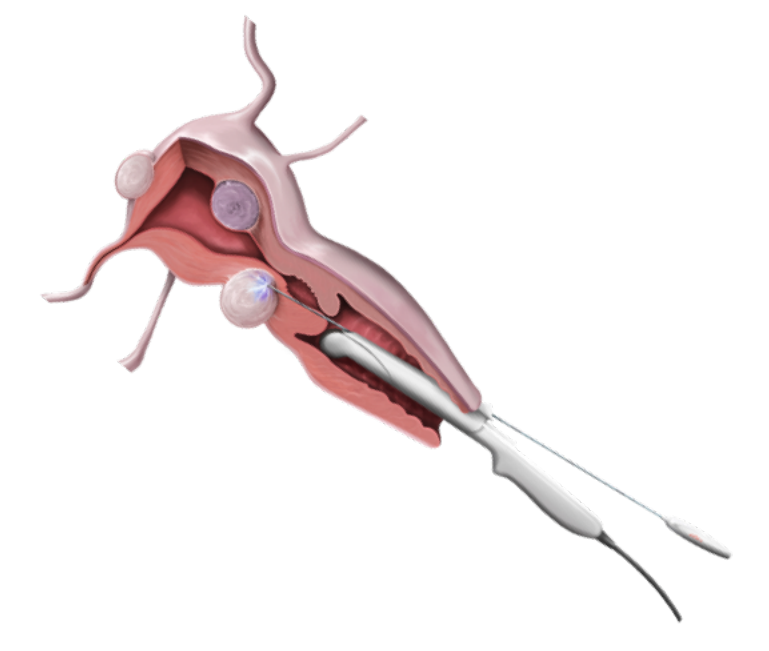
What it looks like on ultrasound
What is the procedure like?
- Before: assessment with ultrasound and, if necessary, magnetic resonance imaging. We explain the risks and you sign an informed consent form.
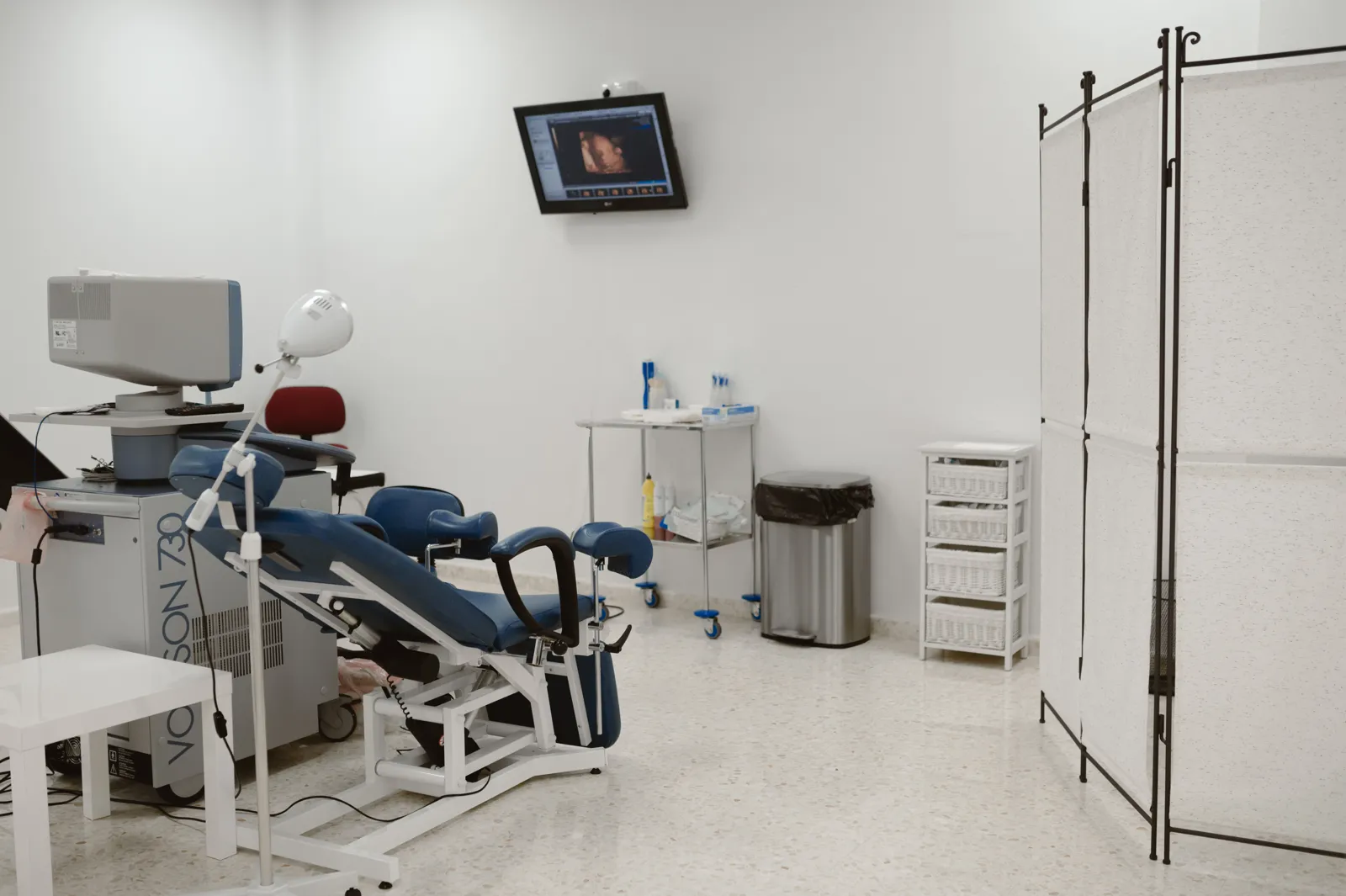
- During: transvaginal, under ultrasound control and light sedation, in a private healthcare centre in Seville.
- After: you usually go home the same day, with rest guidelines and follow-up visits to monitor progress.
Who might it be an option for?
It can be considered for women with fibroids that cause symptoms, especially if medical treatment has not been enough or surgery is best avoided, and in some cases of focal adenomyosis. It can also be considered when preserving the uterus is desired. It depends on the size, number and location of the fibroids and on your plans for pregnancy. Not every patient is a candidate: we decide together after an individual assessment.
What to know before deciding
Like any procedure, it can cause discomfort and carries risks: mild to moderate pelvic pain in the first days, bleeding, infection (uncommon), injury to neighbouring structures (exceptional) and, in some cases, the need for further treatment. We explain them in detail before you decide.
Who performs it
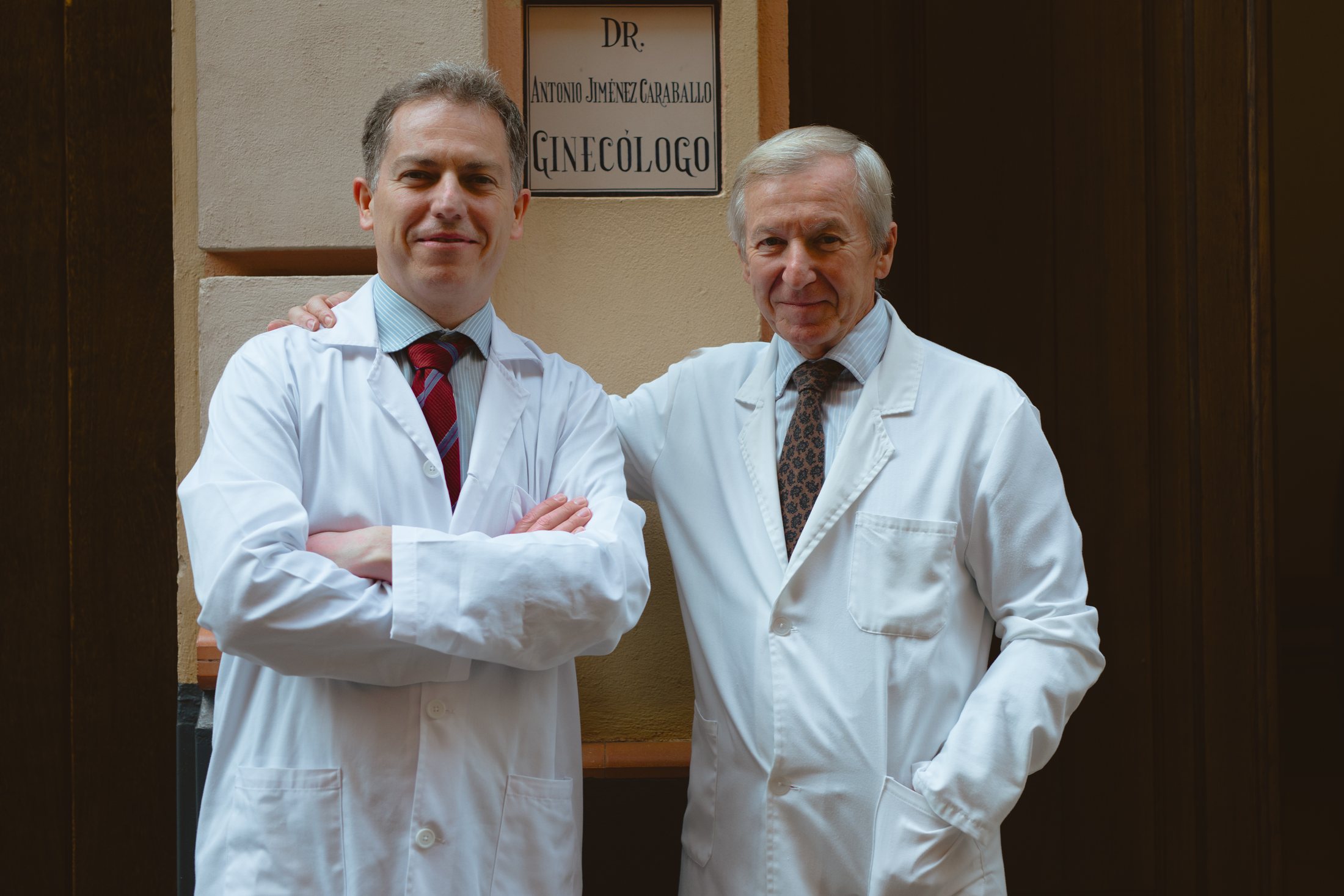
Dr. Carlos Jiménez Rámila (Medical licence no. 41/4116820) leads the fibroid unit at Hospital Universitario Virgen Macarena and has given training sessions on fibroid and adenomyosis radiofrequency to other gynecologists in Spain and abroad. He works in the practice alongside Dr. Antonio Jiménez Caraballo (no. 41/418401).
Frequently asked questions
Do all fibroids need treatment?
What tests do I need beforehand?
Can it be done if I want to have children?
What other options are there?
How do I book an appointment?
Would you like us to assess your case?
Book by phone or write to us. We see patients at C/ Vírgenes 6, Seville.